The primary purpose of the ATC is preventing collisions, ensuring separation, and maintaining public confidence in the national airspace system.
There's been a recent spate of significant airport events. Planes have been cleared to land and/or cleared for takeoff on the same runways and they have come very close to each other and even too close to colliding.
Or: one plane was cleared to land on their own runway while another plane was cleared to land or takeoff on another intersecting runway, and the timing was such that they'd both be on the intersecting runways simultaneously.
These events are too close for comfort. They challenge the basic concept of no two objects occupying the same place at the same time. The people operating the system, orchestrating the airplanes at our airports, have failed to demonstrate good judgement and reduced the public's confidence in air travel.
There is a simple procedural change that would prevent many but not all of these events.
ACTION: add the following paragraph to the FAA ATC manual 7110.65: 3-10-14 Multiple Clearances. For single-runway or intersecting-runway operations, issue only one clearance (to either land or takeoff) at a time.
Do not issue multiple clearances to land or takeoff in single-runway operations, either same-direction or opposite direction.
In intersecting runway operations, only one aircraft may have a landing or takeoff clearance at a time. Issue a clearance to a successive aircraft only after the preceding aircraft has passed through the intersection, or has landed, turned off the runway, and there is no conflict.
Remove the following from the FAA manual 7110.65
3-9-5 ANTICIPATING SEPARATION
Takeoff clearance need not be withheld until prescribed separation exists if there is a reasonable assurance it will exist when the aircraft starts takeoff roll.
3-10-6 ANTICIPATING SEPARATION
Landing clearance to succeeding aircraft in a landing sequence need not be withheld if you observe the positions of the aircraft and determine that prescribed runway separation will exist when the aircraft crosses the landing threshold.
Effective: Immediately
Duration: These changes may be reversed in six months if the FAA administrator certifies they are no longer needed.
That's it. This is a small change that many controllers have used as a personal technique but it has never been a requirement. Recent experience calls for making this a requiment since judgement has not prevailed.
This will prevent events caused by ATC issuing multiple clearances and failing to intervene when necessary.
This would not prevent events driven by pilot error, which appears to include the recent JFK event where a pilot crossed an active runway.
Initial talking-head analysis placed the blame on pilot / aircrew training. There were generic pictures of representative people; they were brown people. Disclosing race by showing pictures of people is a well-used technique of giving the message without saying the words. Look at the Michigan University shooter. We've become adept at not saying the words.
There was a clear tone throughout American aviation and media that 'those people' weren't ready to operate our complicated machines. Critiques of Asian flight training and cultural issues.
The truth turned out to be different. The crashes were caused by corporate greed and FAA participation in corner-cutting.
Airline pilots get a type rating. You get a type rating in a particular aircraft, for instance a DC-9. Once you've got that type rating, you can fly a DC-9 Series 10, Series 20, Series 30, Series 40, or Series 50. There are differences but they're not that significant, and pilot training covered them.
Let's look at the Boeing 737 type rating. They include:
The first generation "Original" series: the 737-100 and -200, and also the military T-43 and C-43, launched February 1965.
The second generation "Classic" series: 737-300, -400 and -500, launched in 1979.
The third generation "NG" (Next Generation) series: 737-600, -700, -800 and -900, also the military C-40 and P-8, launched late 1993.
The fourth generation 737 MAX series: 737-Max7, 737-Max8, 737-Max9, launched August 2011.
Boeing convinced the FAA that flying a 737-900 is covered under the same pilot check ride (driver's test) used for the 1965 B737-100.
Boeing really wanted the One Type Rating to rule them all, because when they tried to sell upgrades to airlines Boeing could say, And No Pilot Training Costs or Delays are Required. Airbus, who treated new planes like new planes, couldn't say that. But these planes were very different; each had different dimensions, centers of gravity, engines, and fuel tanks. There was a big difference between the airplanes.
Boeing is too big to say No to. Boeing is too big to be permitted to fail. Nobody wants to be that person. Everybody says, the Boeing series are the best passenger aircraft in that category ever made. Reminds me of the Titanic.
Back to LionAir610 and Ethiopean302. The second investigation noted,
‘During the verification process of the FDR data, clear similarities were noted by the investigation team between Ethiopian Airlines Flight 302 and Lion Air Flight 610, which will be the subject of further study during the investigation.’
These are the vertical speed profiles of both flights in their last moments, from Flight Radar 24:
What I see is a vertical struggle, a lot of pushing forward and pulling back on the yoke.
in order to claim that the 737-800-MAX is the same as the 737-100, Boing added MCAS software to the airplane. Airplanes are software driven. This was a new function that the pilots weren't significantly briefed on. Turns out, when MCAS goes crazy, the pilots need to diagnosis the problem and disable the MCAS or they're going to crash.
UAL1724, a Boeing 777-200ER (extended range), had a dangerous departure out of Hawaii for SFO:
To be clear, the United 777 is not a 737-700; it is a different airplane. You have to wonder what software upgrades went into the 777 that the pilots didn't need to be trained on, until they did. Did MCAS or its equivalent make it to the -777 fleet?
Media reports say that the United crew was sent to "additional training".
This is what corporations do; they blame cultural safety issues on individuals.
Personally, I believe the complexity of the software on modern flight decks has grown so fast, and Boeing is so eager to keep costs down and keep the airlines flying, that this is not an individual performance issue, and this is not something we can blame on brown-skinned pilots. Finally it happened to a US-based crew.
There is a technical and a safety culture issue with Boeing software. People responsible for the safety of the flying public need to step up. Hello, Pete Buttigieg.
Racism shades everything we see and think. We saw the first 326 fatalities as a function of brown pilots and brown airlines. We barely seee major crashes because of racism.
The headline in The Daily Mail says, "... desperate pilot landing at Austin airport tells passenger jet below it to abort takeoff because they're using the SAME runway." This is a great headline because it truly was only the Fedex crew that prevented a disaster and not the ATC system that is supposed to prevent collisions like between the landing fedEx jet and the departing Southwest jet.
Usually when these events break through to the public's awareness, an FAA spokesperson appears and says, Safety was Never Compromised. It's a cliche. This was a total system failure. These airplanes were not separated by any good fortune of serendipitious timing. The only thing preventing another Tenerife was the FedEx crew's situational awareness and the breath of god.
American aviation is a system with different parts and priorities, checks and balances, and really quite a bit of public transparency. This system, like all systems, can be studied and improved. The people who study the American ATC system have been shouting for at least twenty years that the next major airplane disaster will look like a particular scenario. This is going to be the Next Big Thing.
It looks like this: Two big jets. One of them is supposed to use a runway for takeoff or landing. The other plane will either cross or use the runway, and they collide. This is the nightmare scenario of American aviation, this is what the safety analysts tell anybody who will listen, this is the thing that keeps people awake at night.
Back in the 1980's and 1990's, the bad events in the ATC system were generally unknown outside of the facility. It was as if an information moat surrounded the tower. The controllers would walk into the Quality Assurance office, people would review and talk to make sure everybody understood the implications, and then just like any other Confessional they'd be told to do some perfunctory training as penance, and go and sin no more.
Technology progressed, the internet arrived, and now if a Tower has an event over the weekend, guaranteed on Monday morning the phone rings and Headquarters says, "Hey I'm sure you're already looking at Saturday's event with United 123, call me when you get a solid handle on it".
This Austin situation is awful. As bad as it gets without body bags. The phrase, "pink mist" which was popularized in a 1999 ATC movie to refer to the clouds of airborne body fluids is not misplaced.
Aviation these days is quite public. Various Flight Tracker websites offer the public a view of the airplanes. There are ATC radio fans who put receivers on their houses and stream the audio online at sites like LiveATC.net. The airplane transponders, which used to send position information to the radar site, now transmit really detailed info into the public realm.
So the re-enactions, the tapes, the transcripts that we see - they're all ersatz wannabees, using readily available hobbyist info of unofficial provenance to paint the picture for the public, before the government agencies are anywhere close to making a public disclosure. This is a good thing which keeps good people honest.
As in any breaking news event, we tend to focus more on what the media shows us - oooh, bright shiny object - than to what's missing. The Austin airport does not have ASDE / AMASS gear which would have rang an alarm about the occupied runway. Even though they have 767s and 737s, Congress did not see fit to authorize funds for the Austin AMASS. I bet they will now.
The Tower controller cleared Southwest for takeoff when the inbound was three miles out (roughly). Usually, in nice weather, this could work. If the controller had said, "cleared for takeoff no delay traffic two mile final", that would have been even better.
I think the buried clue is the very low visibility. You hear the Tower controller reciting RVR numbers, "runway visibility range" touchdown 1400 (feet), midfield 600 (feet), rollout 1800 (feet). That's not much at all. 600 feet is the minimum requirement for planes with special equipment and crews with special training. This is the sort of sensitive operation that invokes the concerns about 5G phones interfering with radar altimeters.
Normally in nice weather, with Southwest ready to go and Fedex three miles out, the Tower controller paints the picture - "Southwest123, cleared for immediate takeoff, landing traffic two mile final". And then Southwest hits the gas and takes it on the roll, quickly lining up on the centerline but not being very anal about it.
With an 600-foot midpoint RVR, the departing captain taxies carefully out to the centerline, makes a full slow ninety-degree turn, and really really lines up. Takes a look out the window just to check for deer or vehicles, and then gradually applies takeoff power. It's a completely different takeoff experience, and it takes a lot more time. An experienced tower controller would know that.
Armed with the same misinformation that you have, I offer these thoughts:
Was the controller a low-experience tower controller?
Has the controller ever done same runway, arrivals and departures in very low visibility before?
Has the controller ever sat in a jumpseat or simulator to see the different performance in different conditions?
Was the Cab Cordinator or Tower Supervisor position staffed?
I guess: Yes, Maybe Not, No, No.
ATC is a system, not an individual feat. So lets look at system effects:
The event happens at 6:47 am. Was the tower team all present? Was this a trainee and a distracted instructor?
Why were they arriving and departing on the same runway when parallels were available?
Did anybody brief the tower controller on what to expect and what to watch out for?
Were positions combined? Were controllers working more than one job? Were they fully staffed?
The best book I read in 2022 was, There are no Accidents by Jesse Singer. Singer argues effectively that collisions, crashes, fatalities happen because there's a rush to keep an operation moving fast, staffing is short, training is compromised, and employees are generally pressured to keep everything moving. In other words, safety is a systems issue, a management policy, and a budget decision. It's rarely an individual matter.. We call these "accidents" to normalize and de-stigmatize the events and maintain personal comfort. It's a great book; highly recommended.
There was a similar event at JFK a few weeks ago, between Delta and American. One was taking off, the other crossed the runway downfield. We hear that the ASDE / AMASS worked well. The tower controller urged the departure to cancel takeoff clearance. They stopped before hitting the crossing jet. Disaster was averted.
Let me say this: If these two events in two weeks are a trend, it's going to be a terrible year. Pete Buttigeig, who is notionally in charge and responsible, needs to get ahold of this.
And finally, we're in the media awareness timeframe for the police killing of Tyre Nichols in Memphis. Media awareness begins at the killing and ends at the funeral. Can anybody doubt that police killings are a safety issue for black Americans? Is there pressure for results, courtesy quality assurance, political influence, overtime constraints, and a code of Omerta? Of course. There is no functional civilian oversight, and people fly Blue Lives Matter flags.
Police departments are failed public safety systems. People will say, But not all cops are racists. And of course that's true. Put any group of people together and they're not a monolith.
The phrase, Not all cops.... recognizes that in fact, some cops are bad apples, prone to beating and biased against black people, and they walk around with authority and guns. And the good apples stand around and let it happen.
Would we tolerate an ATC system where "not all controllers" are bad apples, indifferent to safety? Where the good apples get busy with their coffee and scones while the rookie puts two planes together? I don't think so. But these cops are going to kill more Americans than the airport disasters.
Why do we tolerate a police system - ostensibly a public safety system - that kills more Americans than aviation does, with some cops walking around indifferent to safety? And yet we're petrified about two airplanes getting too close.
Couldn't be that the cop's victims and the passengers are from different socio-economic groups, could it?
Donald Trump's legal team keeps prosecutors and congressional investigators away from most of the meaty substance until March. In the meantime, Russia's Putin wants nothing so much as Trump back in the White House.
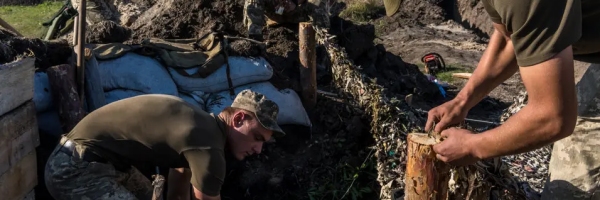
Putin invades a long, narrow column into Ukraine. 50 meters wide, 3 kilometers long. People quibble about significance. NATO stutters. In their 50-meter wide corridor, eventually bordered with fences and razor wire, Russians dig trenches along both sides of the narrow space.
In the center of the narrow 50 metres, supply vehicles shuttle comestibles and rotate new and used porta-potties in and out.
Stalemate persists. Strong words are exchanged among NATO. A major Russian presence outside of Ukraine exists to support the tiny intrustion. Cold warfare, trench warfare persist. Putin makes no statements. American soft power isn't effective. President Biden realizes the US people and the US Congress will not go to war over essentially a 5K track.
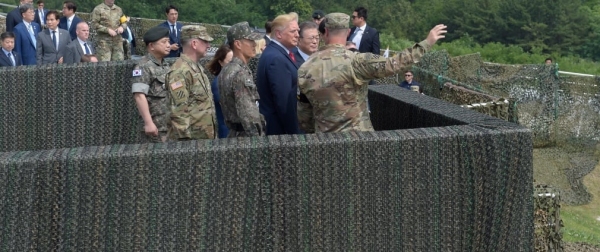
In May 2022, Donald Trump and his family (Don, Doofus, and Ivanka) surprise the world by appearing in Ukraine and driving in a cortege of EF-150's to the fenced perimeter. An Ilyshin has brought the electric trucks over. Chairs are produced by the Russians. Donald speaks through the fence with a senior Russian officer. They shake hands through the fence, and Trump drives away.
All Congressional and Attorney General (state and federal) demands for testimony and evidence are now blunted by Trump's assertion that he and his family are performing vital work in the national interest that can not be interrupted or disclosed at this time.
Every Friday, the Trump Family returns to the fenceline. Several Russians wearing uniforms but no insignia are waiting to talk with them. Photos are taken. In late May, Trump brings a dozen pizzas and delivers them to the Russians. In the future, Trump brings pizza every Friday. It's a NY sign of respect, he explains.
In June 2022, Trump and his family are brought inside the fenceline. The same unmarked uniforms great them. After a half hour, toasts are exchanged and the Trump Team departs. These face-to-face meetings continue every Friday. Trump has nothing to say to the press. To his base, on the subscription-only newletter, Trump says: We're working on things. I think it's going to be all right. I'm a guy who gets things done.
Next Friday, Trump brings every Russian staffing the trenches a new pillow from his friend Mike Lyndell.
Biden and the Administration are impotent. They can't get NATO to agree on military action, or even a blockade isolating the thin strip of land. Putin will not speak to Biden. Newspapers and investigators clamor for Trump to come home and face the music, but they have no effect.
In late July 2022, as the Pappilion variation of the COVID-19 virus is sweeping Europe, Trump promises to bring American vaccines and boosters to both the Russian troops inside the fence and also to the Ukrainian people living near the no-mans-land.
The vaccine effort is very successful. The No-Mans-Land and the surrounding towns are the safest places to be in Europe. Trump provides high-speed wifi at his own expense so soldiers on both sides can stay in touch with their families.
On the Friday before the Labor Day weekend, Trump and Family bring pizzas and walk inside the wire. The young Trumps walk further inside of the trench and step within a canvas cover. Donald and a senior Russian officer come to the wire, signal to TV crews, and DT says: "I'm going to spend the weekend here along with my family. They have always been my advisors. I think you're going to like, well let me say that I hope we'll have a good announcement soon".
On Sunday, after attending Russian Orthodox Services, Trump comes out of the wire. Reading from a prepared text, he says "I've enjoyed the hospitality of our hosts quite a bit, they're very generous and friendly, which is also my impression of the Russian people. They've shared everything they have with us.
Tomorrow you will see trucks, vehicles, personnel carriers moving in and out of this so-called No Man's Land. The Russian troops will withdraw to previous boundaries. When they are all gone, the Russian senior officer and I will talk the trenches and be sure that every single soldier is evacuated. By Tuesday, this crisis that some so-called leaders found insurmountable will have passed peacefully.
I want to thank Premier Putin and all his generals for their help in bring the world back from the edge of war. God bless all of them. God bless the United States. I will not take any questions at this sensitive time."
On Tuesday, the Russians have evacuated, Trump and the General make their walkthrough, and the previous border is re-established. Complete peace is restored by Sept.10th, although Russian forces still sit amassed along the Ukranian frontier.
Trump is not seen for days. Mid-September, Trump is seen touring his hotel properties in Europe. "A private citizen, just another American businessman in Europe" he shouts to the press.
Trump and his family are nominated to share the 2022 Nobel Peace Prize for prying the world away from WW3. And they win it.
Trump's command of the Republican party is cemented prior to the 2022 elections. The Republicans take the House. Republicans sweep the Senate. Joe Biden, once a president commanding the House and a tied Senate, becomes the whipping boy for 2023 and 2024.
Trump does not return to the United States until Nov.20th, to conduct a series of lightning rallies across the country. After election day, he decamps to the French Rivera to rest and spend time with his family. All attempts to hold him accountable, and to render him unelectable, have failed.
He is a hero with his Nobel prize.
What story have you got that does a better job of explaining the observed world?
(This is a copy of a facebook response I made, in response to Eryn Hughes' question about transgender athletes). Categories are an interest of mine. These are strictly My Thoughts Only, and I have no credentials.
It seems to me that at one time, rapid categorization probably conferred an evolutionary advantage. Assessing creatures and objects and categorizing them as dangerous, as unimportant, or as food was crucial to success.
It may be that over time, we are bred to be makers and users of categories. We may be both creators and victims of categories.
As opposed to the time of saber-toothed tigers when people were generalists, in today's world so many people are specialists and survive within an economy that rewards niche categorizations.
We project our categorizations upon others. We seek categories for ourselves, aspirationally. We install categories into our children.
The habit of categorization may have served us well once, but it may not serve "us" well any more. There's a lot of habits our species have left behind. The admixture of categories, competition, and capitalism distort our culture and the playing field.
Whole industries are based on categorization. Money and power flows to the competitors and corporations that thrive within our socially accepted categories. Money ignores the people that don't fit into our categories -- or even worse, power punishes people who challenge our established categories. See Colin Kaepernick.
Our categories are not mere suggestions; we enforce them, and we (socially and economically) punish people who don’t fit into the categories.
I would offer Caster Semenya as an example, (or Mokgadi Caster Semenya OIB as she is known at home). Her performance and even her existence challenge our categories, and so we banish her from organized sport, or insist that she take performance-degrading drugs in the name of sportsmanship. What a contrast to our white Euro cyclists with their performance-enhancing drugs.
At least some solo sports initially present themselves as harmless categories where it's simply the human vs. the clock as in running, swimming, etc. There are still huge economic implications: sponsorship, scholarships, support.
Our categories are social constructs with major capitalist implications, and then we project them onto our children. Children's team sports, which rely on organization and cooperation to get a quorum on the field, mirror adult (corporate, economic) team sports.
Our school system schedules Black and Gold days, and non-participant children are criticized and peer-pressured into the local category which can approach fetishism.
Athletic children have to pick a category and then cast themselves into their category’s lifestyle. Football or baseball? Offense or defense? Short or long distance?
Righty or Lefty? Few will choose switch-hitting. Fewer still will choose switch-pitching, which we don’t have an accepted term for. See baseball’s arcane Pat Venditte Rules for Ambidextrous Pitchers.
To Be Certain, our enforcement of categories and baseball’s tremendous complexity in handling category switchers mirrors our inability to deal with category-bending regarding our most primal impulses, and certainly reflects the issues about transgender athletes.
We don't like to mix/match our categories. Why isn't Serena Williams seen as America's greatest athlete, let alone best tennis pro? Or Simone Biles? And why isn’t the world’s most successful soccer team (the US Women’s Team) paid as well as the American men’s soccer team?
The answer is that our categories include the same racial, gender, and tribal flaws as our culture. Who can say that sport as-we-know-it is pure? Or even only slightly corrupt?
The competition in our organized sports is so fierce that only small differences set the top competitors apart from the merely world-class. Tiny biological differences matter: height or weight in some sports, VO2-Max in others, and the tiniest natural nuances are financially lucrative if they fall within our categories. Otherwise, you’re Caster Semanya.
In the end we seize upon our most vulnerable people to maintain our precious categories. Rachel McKinnon, PhD was the focus of rage and hate as the transgender cyclist who confounded our categories. She became the focus of then-President Trump’s tweets. The notoriety was so great they changed their name to Veronica Ivy.
Can there be any doubt that our generally accepted categories in sport are social constructs? Are we amazed that Caster Semanya, Colin Kaepernick, Serena Williams, Simone Biles, and Veronica Ivy are minorities?
Just as we see in the social / political realm, we ignore the people that confound our comfortably acceptable categories.
We assuage our hurt feelings by demonizing the vulnerable non-conformers and by granting victim status to grievants who would maintain the legacy categories, the status quo.
Allan Bakke felt they were kept out of medical school because of a new categorization. Dr. Jennifer Wagner felt that losing to a cross-category competitor was unfair. Society has supported them.
Further, consider the effect of language upon our categories. Benjamin Whorf suggests that we can only think about and communicate about topics that we have words for. We don’t have easy words for Caster Semenya, or Elliot Page, or Pat Venditte, and we’d rather support our comfort than actual people.
At a very basic level, our categories helped; tigers vs chickens, flight or fight, etc. In the face of complexity our categories no longer serve us well; we incentivize ourselves to reject individuals rather than reject a counter-productive social construct, and we revert from enlightenment to tribalism in defense of our precious categories.
I've recently read "Sorted" by Jackson Bird, and I'm currently reading “Sorting Things Out” by Geoffrey C. Bowker and Susan Leigh Star, and I’d recommend either to anybody interested in categorization and language.
I'd appreciate feedback/ critique as readers see fit.






 Posts
Posts

